
Why do you go to Bolivia? That’s what people asked us in Costa Rica & Ecuador when we told them we’re planning to go to Bolivia. Apparently, apart from the famous Salt Flats, there is nothing to do in Bolivia. Even most travellers we talked to never did anything else than the Salt Flats of Uyuni. So we decided to ask our Facebook friends for tips and got loads of them.
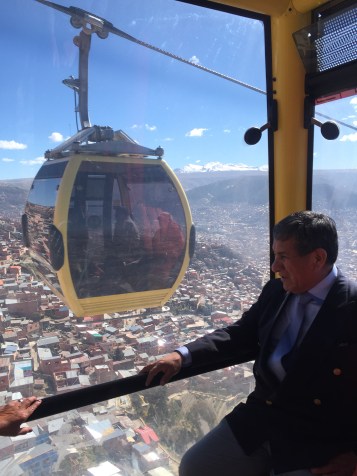
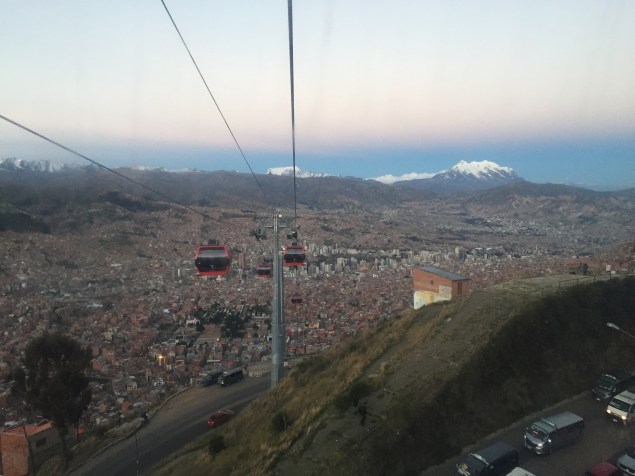
Arriving at 2AM in La Paz wasn’t ideal, but after a few hours of sleep we could start exploring the city and it quickly grew on us. Down in the valley is La Paz (3600m) with towering above it the fastest growing city of South America: El Alto (4000m) and the snow capped peaks of Illemani (6438m). Traffic in La Paz is horrendous, but a few years ago they put in the first lines of a cable car which connects El Alto with La Paz and is the best public transport we’ve seen in any South American country. Highly popular, cheap ($0.50) and clean. We loved it so much we took every line to every part of the city.
From La Paz we arranged for 4×4 to take us to the Salt Flats in Uyuni, but via the less traveled Sajama NP and Coipasa Salt Flats. It quickly turned out to be the highlight of our entire trip until now. Until we reached Uyuni, we didn’t see any other tourists which made it far more special: being the only one makes you feel you are exploring the place.
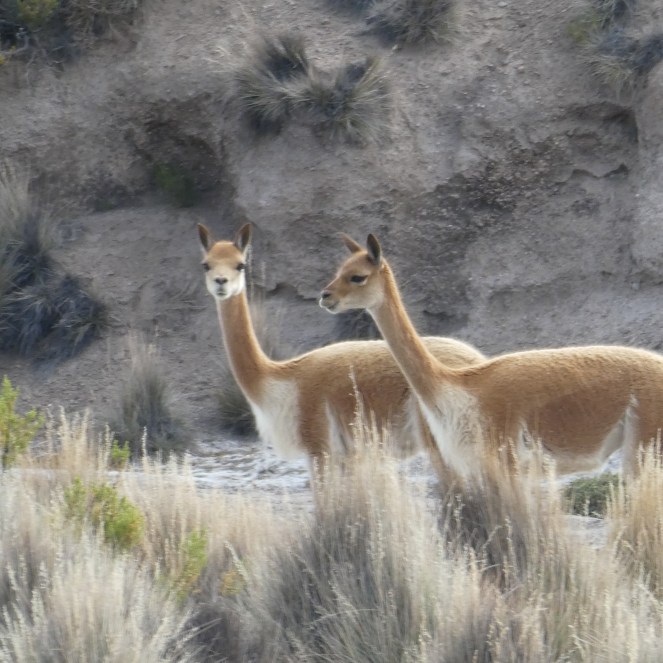
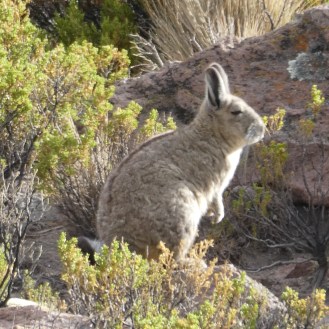
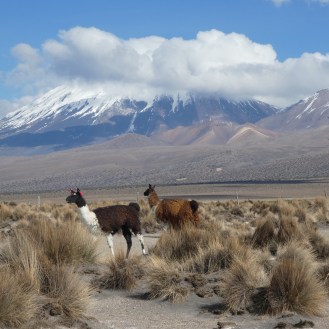
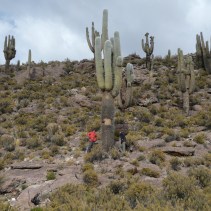
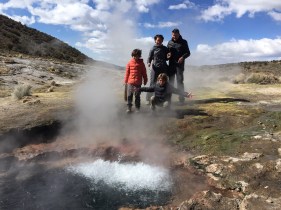
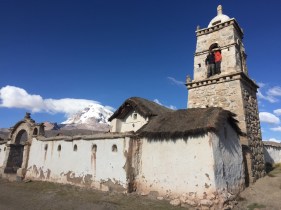
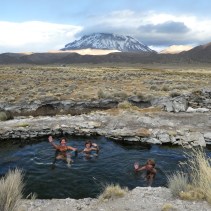
The vastness and remoteness of Sajama National Park was enormous. The highest peak of Bolivia towering above us as we made our way through the park on rough 4×4 tracks. Slipping into hot springs with just the mountain looming over us and some llamas in the distance. Seeing vicuñas, rhea (ostrich) and Andean chinchillas in the wild. Visiting remote villages where only some elderly people staid behind to mind the alpaca’s & llamas. Visiting geysers without seeing anyone else, hiking to 1000 years old cactuses and eating Alpaca steaks at night.
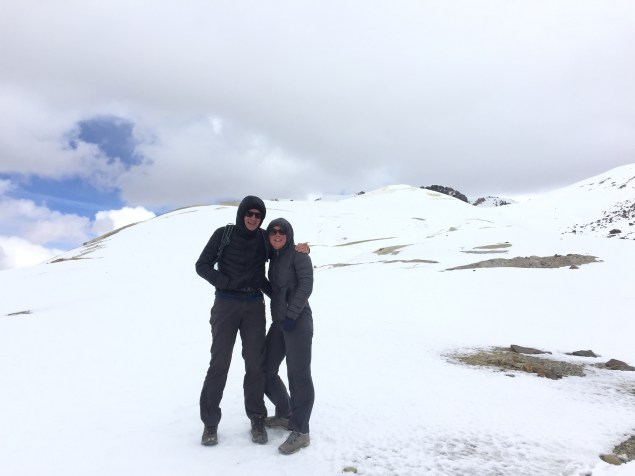
When we asked whether we could do a nice hike, they took us up to a mining road all the way up to 5400m, from where we hiked up another 200m in the snow with views of all the snow capped mountains around us. What an incredible landscape!
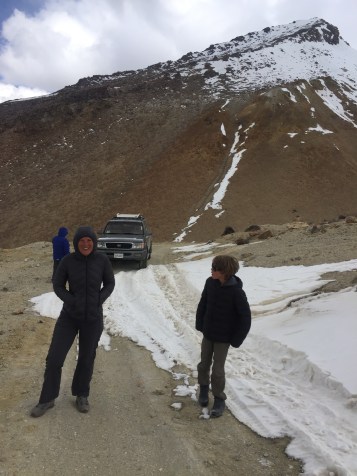
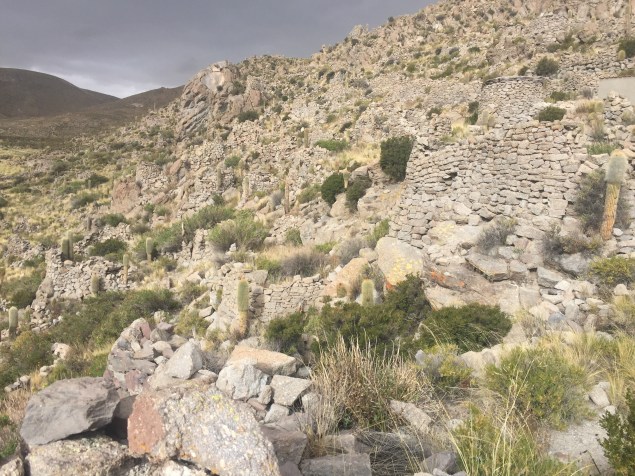
On the 3rd day on the Coipasa Salt Flats we got stuck in a sandstorm and the driver & guide had lots of trouble getting off the Salt Flats and getting us to Alcaya, a very remote settlement where there are truly amazing ruins of a pre-Inca civilization. Once we found our way to Alcaya in the midst of the sand storm, it turned out to be deserted. The few people that lived there must have been out on the Quinoa fields. We forced ourselves into a deserted hotel that some NGO must have built for the anticipated tourists that never materialized. Felix & Simon of course were the very first once to climb through the window so they could open the door for us. Five times they asked us whether it was illegal what we did. Each time our honest answer was “Yes, but we’re in a sandstorm and need to shelter somewhere for lunch don’t we?”. I guess they’ve learned another lifeskill.
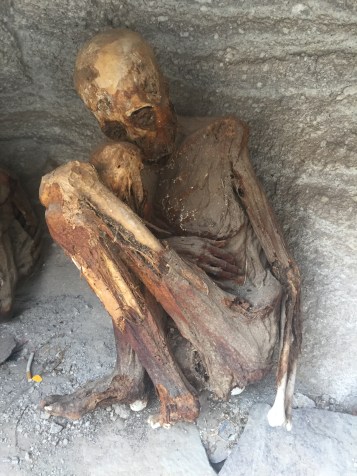
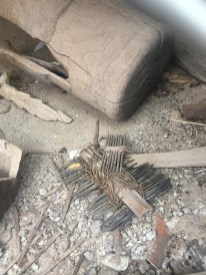
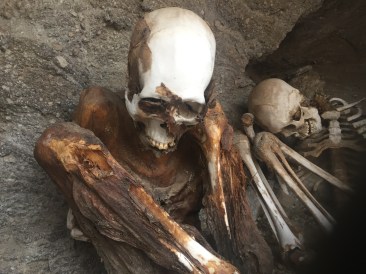
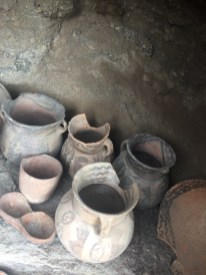
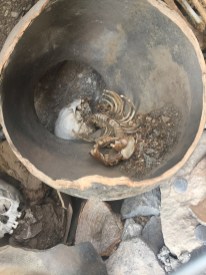
Once the storm died out, we hiked up to the pre-Inca ruins and were astounded by what we saw. Mummified corpses in excellent condition and pottery shreds everywhere as if the site was discovered yesterday.
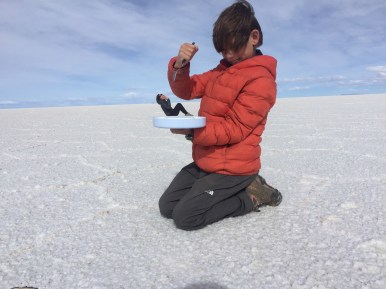
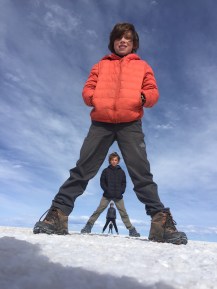
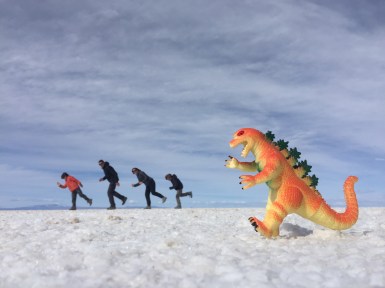
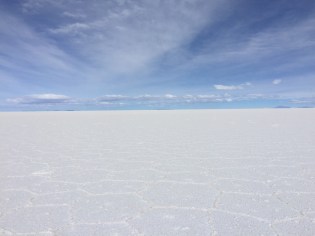
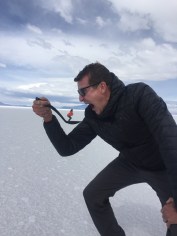
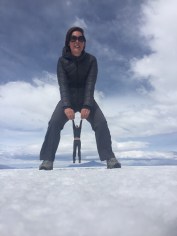
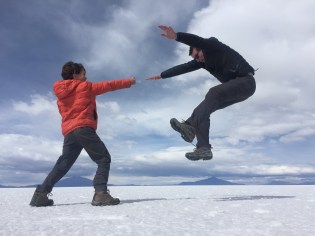
On our last day we returned to the tourist trail visiting the famous Uyuni Salt Flats, but although it was nice to see, it wasn’t as spectacular as we had hoped for. Perhaps seeing all the other tourists took away our “Indiana Jones explorer”-feeling that we had the previous 3 days. Still the pictures we took on the Salt Flats are epic 🙂
After Uyuni we traveled to Potosi (4100m), one of the highest cities in the world which funded the Spanish empire with its silver mines. The mines are still operating and the conditions in the mines are pretty horrible as Simon already described in his post.
As Saskia and the boys were visiting Potosi I already made my way back to La Paz to fulfill a long time dream: stand on top of a 6000m peak!
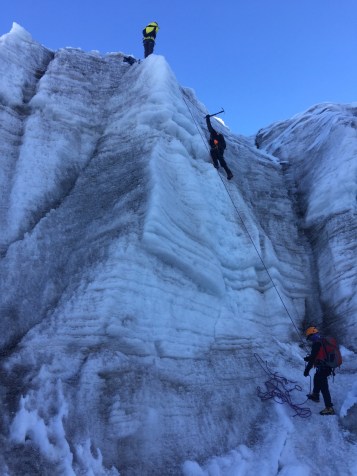
Just outside of La Paz is the 6088m Huayna Potosi. An ideal ascent for a novice climber like me. In La Paz I picked up a guide and all the gear (crampons, ice axe, boots, etc..) for the hike and on the first acclimatization day we practiced going up and down with crampons and ice climbing. It was still fun then: I managed to climb up a 10m vertical wall with my crampons and two ice axes. Fortunately safely secured by my guide as I slipped halfway and would have dropped down…
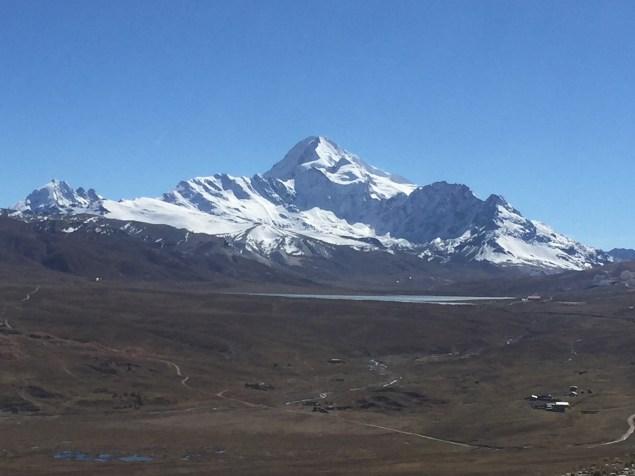
After a lousy night sleep at 4800m we took all our gear up to high camp at (5130m) and prepared for our ascent in the middle of the night. Well acclimatized after two weeks at altitude, I only developed a mild headache overnight, so I was as ready as I could be…. but then as we went to sleep at 6pm to wake up at midnight for the ascent, the wind started blowing. The later is became the stronger the wind. It felt like the roof of the refuge would come off and the at midnight the guides came in to tell us it was off, as they were afraid the wind would blow us off the mountain. No ascent for us tonight unless the wind would die down before 2am which is the absolute deadline. Why? Because it takes 5-6 hours to ascent and once the sun comes up the snow starts to become sugary and in-stable. Not safe enough for us the descent again.
At 2AM the wind was still howling and that was it for me…. until early in the morning people frantically started to pack up for their ascent. Puzzled I asked my guide what the plan was and he told me we could go up to 5500m, but not any further. I decided that wasn’t worth my trouble as I didn’t feel to hike up a mountain halfway, so I told him to simply descent to basecamp and call it a day. Once I said it, the guide exclaimed “OK, we can go to the top!”. What? Wasn’t that dangerous? Doesn’t the snow get sugary? Aren’t we at risk of getting the snow trapped under our crampons on the way back and slide off the mountain?
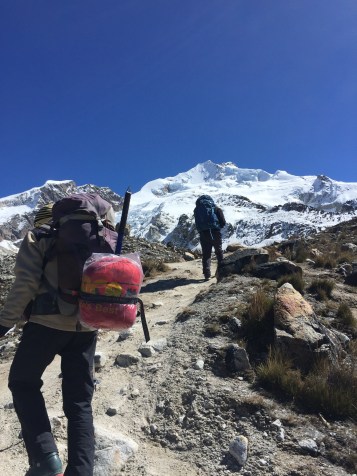
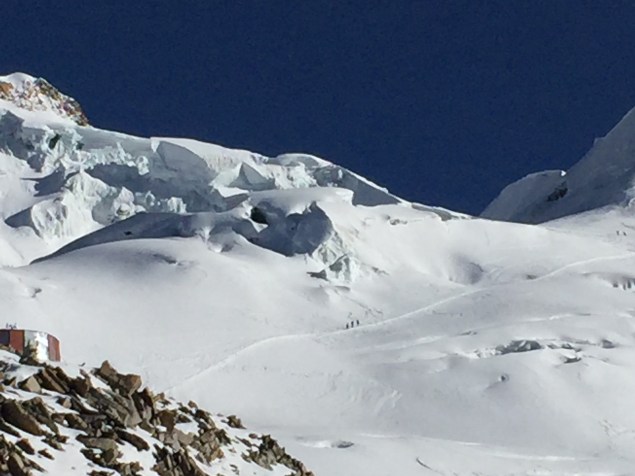
And that’s when I made a decision to play it safe. I promised Saskia and the kids not to take stupid risks and this was clearly a risk. Yes it can be done, but is it safe? The guide will take me because I’m paying and he promised to take me to the top. Being twenty years younger I would have certainly done it… and yes other people summited that day around noon. And even in the middle of the night, during that storm, people from our neighboring refuge went up and made it to the summit and back alive. But I didn’t, I came down from high camp after a few cold gruesome nights without achieving anything but playing it safe. Can you hear the regret in my voice? 🙂
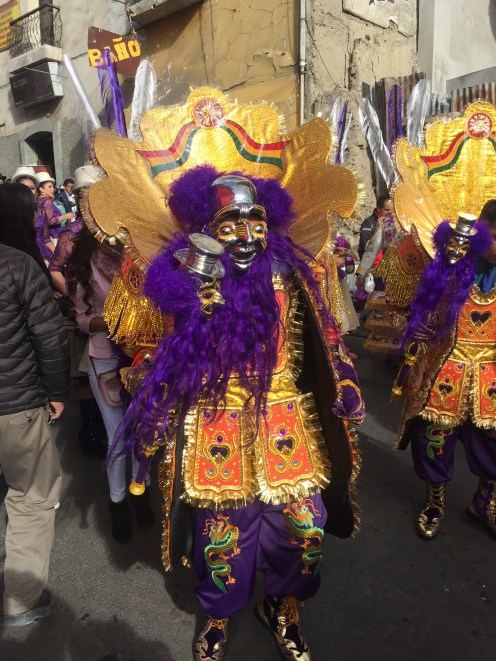
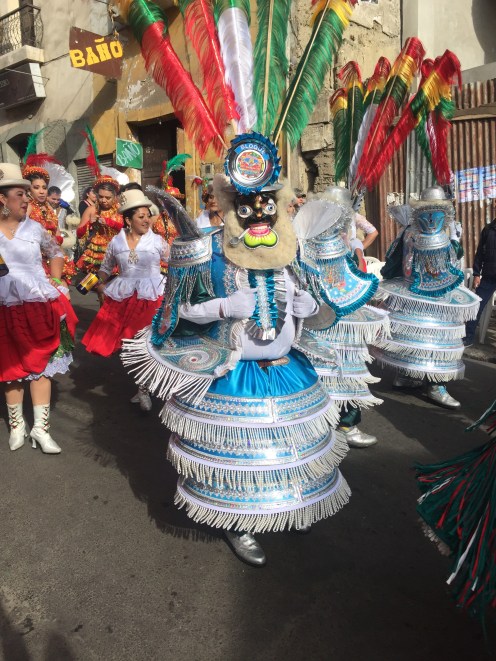
Anyway, Bolivia was great! It had a lot to offer and I think we only saw half of it. The only thing is that the Bolivians like to drink, and when they do they drink heavily. Saskia and the boys developed their own code to warn each other for drunken people, it’s the “Happy scale”. Happy-1 is just happy, and Hapy-5 is when they can’t stand on their legs. Well especially during the Gran Poder festivities we’ve seen a lot of Happy-4 and Happy-5 people.
Prachtige artistieke foto’s van jullie en weer een mooi verslag!
Very cool arnout! It’s a shame that you didn’t make the summit, but as you said, it’s better to be safe and a happy family of 4. Thank you all for the fantastic updates. What’s next???